
Halloween can be a fun time to bring a little creativity and seasonal excitement into your middle school ELA classroom — without completely abandoning your curriculum for the day. 🎃
Whether you're looking for Halloween ELA activities, Halloween writing activities, or fun ways to incorporate Halloween into your middle school English classroom, these ideas are easy to adapt to the skills you're already teaching.
And don't worry: These activities are festive without being too spooky.
Here are six fun Halloween activities for middle school ELA that incorporate reading, writing, literary analysis, rhetoric, and independent reading.
1. Design a Haunted House Based on a Character's Greatest Fears
This is a fun way to combine Halloween with character analysis and text evidence.
Have students design a "haunted house" filled with their most recently read character's greatest fears. Each room, object, or feature of the house should connect to something students know about the character.
For example, if a character is afraid of being alone, students might design an empty room. If a character struggles with trust, they could include hidden doors, mirrors, or secret passageways.
The important part is having students explain why they made each choice.
You can ask students to:
Identify one of the character's fears.
Design a room or feature of the haunted house to represent that fear.
Find text evidence that supports their interpretation.
Explain how the design connects to the character.
This activity gives students a creative way to practice characterization and citing text evidence while thinking more deeply about the character they've been reading about.
2. Choose a Halloween Costume for Your Teacher
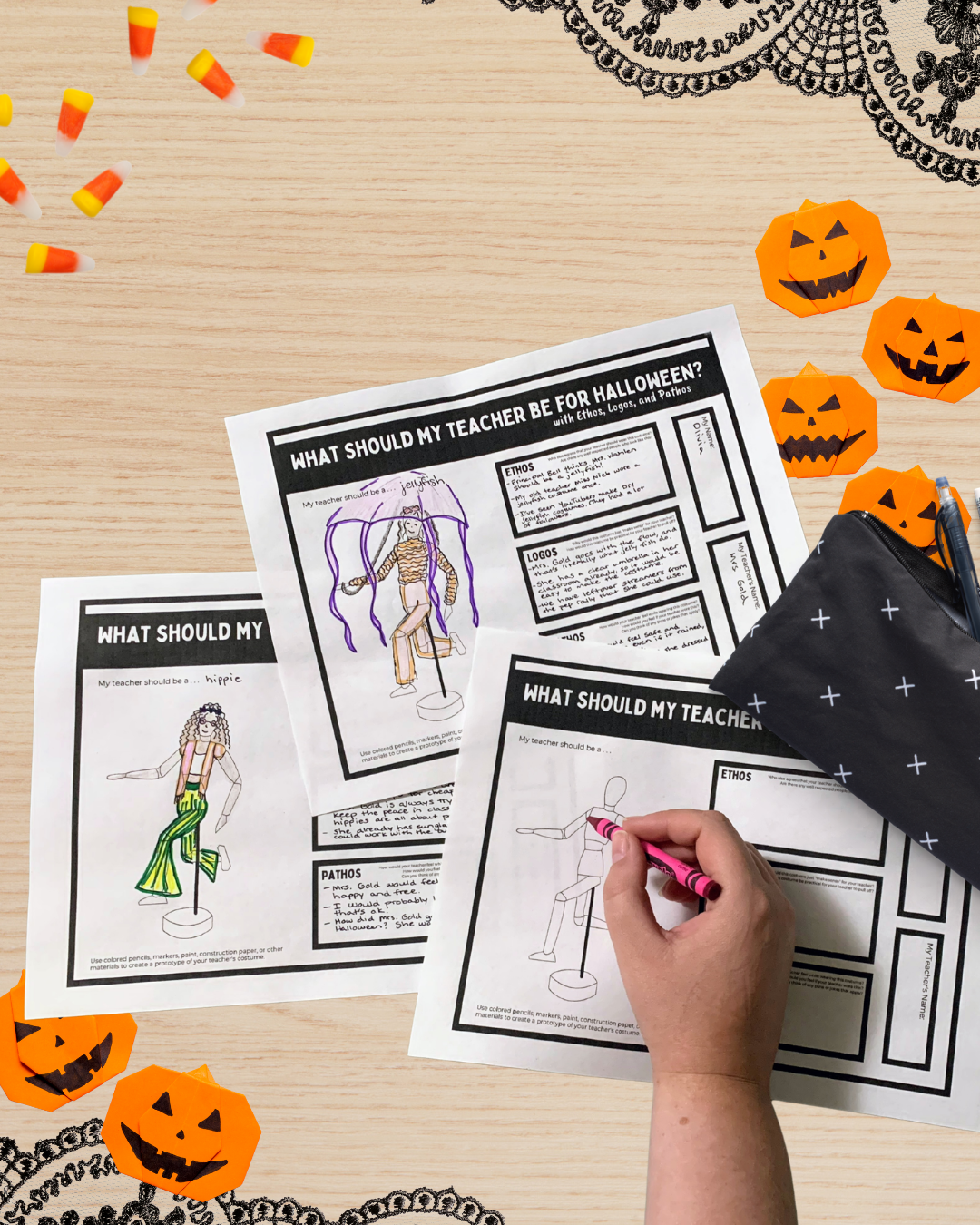
If you're teaching ethos, logos, and pathos, Halloween provides the perfect excuse to let your students make an argument about something that really matters: what their teacher should wear for Halloween. 😂
Yes, it’s been done in elementary school, but the persuasive appeals take it to a whole new middle school level.
Have students choose a Halloween costume for you and defend their choice using the three rhetorical appeals.
They might use:
Ethos: Why should you trust them to choose your costume?
Logos: Why is their costume choice the most logical option?
Pathos: How will their costume make people feel?
Students could write a short persuasive paragraph, create a mini-presentation, or even deliver a quick speech to the class.
You could also turn this into a class debate by having students argue for different costume choices.
The best part is that students get to practice identifying and using rhetorical appeals in a context that feels a little more fun than a traditional assignment.
3. Create a List of Your Teacher Writing "Fears"
Want to sneak a little writing skills review into your Halloween activities?
Ask students to create a list of what they think your greatest writing "fears" are.
Maybe it's:
No text evidence
Forgetting end punctuation
Writing one giant paragraph
Starting every sentence with "And then..."
Using vague words instead of specific language
Forgetting to capitalize proper nouns
Turning in an assignment with no name
Have students create a "Teacher's Writing Fears" poster and display it somewhere in your classroom.
This is a fun way to review your classroom's writing expectations and common writing mistakes while giving students a chance to think about the skills you've been emphasizing.
You could even have students create a "Top 10 Writing Nightmares" list based on the mistakes they see most often in their own writing.
4. Decorate Pumpkins with Literary Symbolism
Halloween is a natural time to review symbolism in literature.
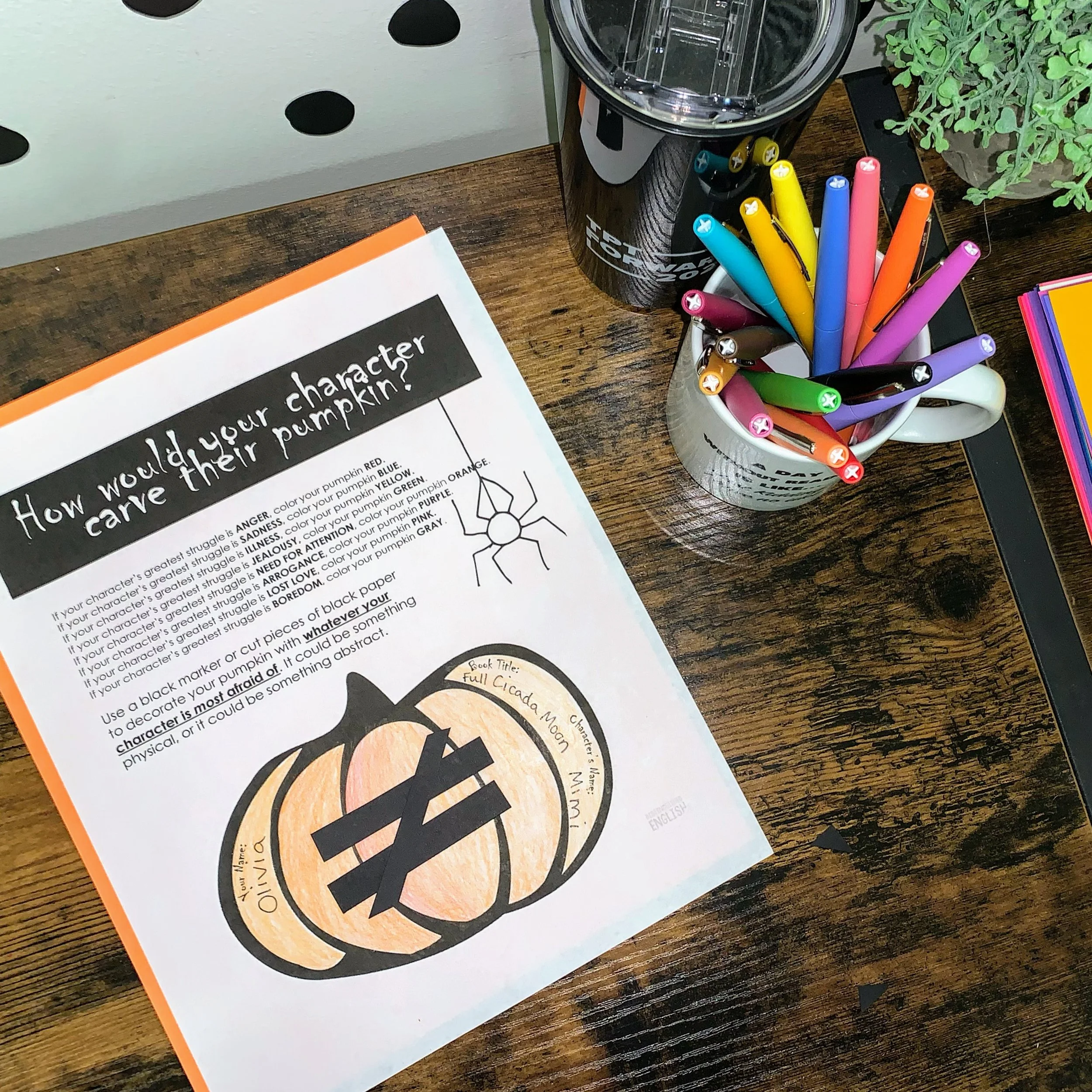
Start by reviewing how authors use objects, colors, places, or other elements to represent larger ideas. Then, have students choose an important object from a text they've read and create a pumpkin design that represents its symbolic meaning.
Students might include:
An illustration of the object
Colors or images connected to its meaning
A quote from the text
An explanation of what the object symbolizes
Text evidence supporting their interpretation
This activity works particularly well when you're teaching literary analysis, symbolism, or theme.
You can have students work with a common class text, a short story, or their independent reading books. If you want to keep things simple, students can draw their pumpkin designs on paper instead of using actual pumpkins.
The Halloween theme adds some creativity to the lesson while students continue practicing an important ELA skill: explaining how an author uses symbolism to develop a larger idea.
5. Dress Up as a Character from an Independent Reading Book
If your students enjoy independent reading, Halloween is a great opportunity to combine independent reading and speaking and listening skills.
Invite students to dress up as a character from one of their independent reading books and give a quick book talk to their classmates.
Students don't necessarily need a full costume. They could wear one accessory, bring a prop, or choose an outfit that represents their character.
To keep the activity focused on ELA skills, ask students to share:
The title and author of their book
The character they're representing
A few important character traits
A challenge or conflict the character faces
Why they chose this character
Why their classmates might enjoy the book
This is a simple way to get students talking about books and sharing recommendations with their classmates.
It also gives students an authentic reason to practice oral communication and book talks while celebrating Halloween.
6. Create a Haunted House Book Report
Looking for a more involved Halloween ELA project?
Turn a traditional book report into a haunted house!
Students can create a haunted house based on a book they've read, using different rooms or areas of the house to represent important elements of the story.
For example, students might use different parts of the haunted house to represent:
Characters
Setting
Conflict
Important plot events
Theme
Symbolism
Character development
Students can then explain their creative choices using details and text evidence from the book.
This is a great option if you want a creative book report project that still requires students to demonstrate reading comprehension and literary analysis skills.
Want to save some prep time? I have a ready-made Haunted House Book Report assignment that is all set to use if you're looking for a Halloween-themed reading project for your middle school ELA students.
Make Halloween Fun in Your ELA Classroom
Halloween doesn't have to mean putting your curriculum on hold. With a little creativity, you can incorporate seasonal activities into the ELA skills you're already teaching.
Whether your students are working on character analysis, text evidence, persuasive writing, rhetorical appeals, symbolism, literary analysis, or independent reading, there are plenty of ways to make your middle school ELA classroom feel festive while keeping learning at the center.
And, honestly, a little Halloween fun can be just the thing to keep students engaged when everyone is already thinking about costumes and candy. 🎃
So embrace the pumpkins, the haunted houses, and the delightfully dramatic writing "fears" — and enjoy a little not-quite-so-spooky-season fun in your ELA classroom!